The Basic Steps to Building and Construction in Kenya
Land Acquisition & Title Verification
Zoning & Land Use Check
Design & Approvals (Permits, NCA, NEMA)
Construction (Site Prep, Foundation, MEP, Finishes)
Follow these four steps in order to build safely and legally in Kenya.
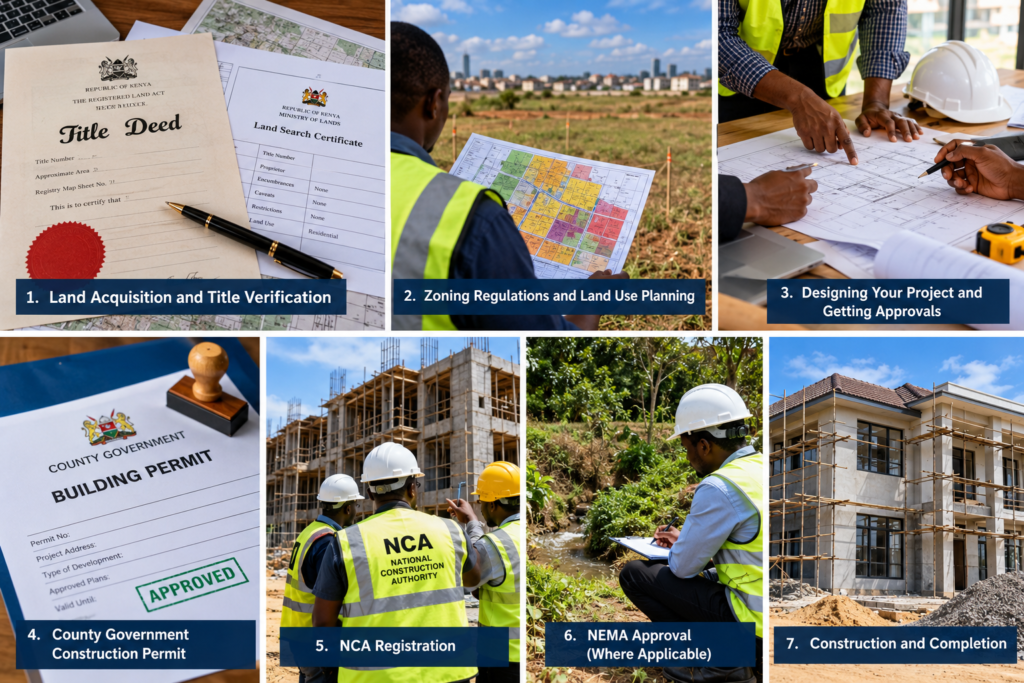
Understanding the basic steps to building and construction in Kenya, before starting a project, will save you numerous hours of stress and post-construction repairs. This involves understanding the process of planning, compliance with different regulations, and collaboration with licensed professionals.
It doesn’t matter if you are building a dream home or putting up a commercial block; it is necessary to understand the construction process from the beginning. This will save you from costly delays, legal disputes, or poor workmanship.
With the increase in demand for housing and real estate across the country, it is very important to start right. Unfortunately, for many, this process seems very complex, and thus, they choose to leave the process to a professional. This can be very expensive or lead to a lack of actualization of one’s desire.
This guide aims to break down the process, step by step, of the basic steps of building and construction in Kenya, from the moment you secure a plot to the final coat of paint.
Land Acquisition and Title Verification
Building and construction start from the location where the construction will take place. It can make or break the whole project. It starts with the legal acquisition of land.
This means having a valid title deed and confirmed ownership of the land by the Ministry of Land. There are numerous cases of project owners who have lost millions of shillings due to missing this vital step. A land search at the Ministry of Lands will confirm the identity of the landowner.
The process of land search can be done either online or offline. The Kenyan government, through the citizen portal, has made the process of land search easier. The required documents for land search include:
Required Documents for Land Search
- A copy of the Title deed
- Your national ID number
- Your KRA PIN
- Land parcel number in the format NAIROBI/BLOCKxx/xxx
It will cost you 500 shillings to make a land search, either online or physically at the land registry offices.
The land search will tell you:
- Who owns the land
- If there are any loans or caveats attached to the land
- Any disputes recorded
It is only after you have carried out a complete transfer of the land to your name that you carry out the construction.
Zoning Regulations and Land Use Planning
The next step after legally acquiring the land is to determine what your land is legally allowed to be used for.
Counties in Kenya have issued specific zoning guidelines to classify their land into residential, commercial, industrial, institutional, or mixed use. The type of building and construction you want to put up should align with the land use requirements of the county government.
Don’t skip this step, as without zoning compliance, your project can be stopped or even demolition.
Designing Your Project and Getting Approval
Once the first two steps have been set up, we can move to turning ideas into blueprints. In this case, it is necessary to engage professionals who can guide you through the process. Some professionals to engage include:
Professionals to Engage
- A licensed architect to create the building design
- A structural engineer to ensure the building is safe and in compliance
- A quantity surveyor to estimate costs effectively
These three professionals are legal and professional requirements for safe building. Some individuals prefer to use an individual professional for each of these tasks. At the same time, though, it is more appropriate to seek out the services of Timely Architecture and Engineering survey, which offers its clients integrated services that combine architectural design with engineering input. The company has employed professionals in the various sectors of building and construction to ensure that they meet both the codes and regulations of building and construction, and the vision of their clients. They also ensure a continuation of the owner’s dream from the beginning to the end.
In this stage, one of the basic steps of building and construction in Kenya is acquiring the appropriate approvals. These include:
1. County government construction permit
Many counties have adopted technology and allow clients to visit their online portals, send in their architectural plans, and have them approved digitally. For some, though, the approval process must be done physically in the county offices.
The permit, known as the building permit or construction permit, is a document provided by the county government to authorize the construction of a new building, or a situation to amend or renovation of an existing pre-approved building.
The cost is usually 1% of the estimated cost of construction.
2. NCA registration
Other than the building plans, the National Construction Authority must register your project and the contractors to ensure they are qualified, and the site meets the safety requirements.
3. NEMA approval, where applicable
NEMA approval is usually necessary for large and environmentally sensitive buildings and construction projects. In such cases, an environmental impact assessment (EIA) approval needs to be obtained from the NEMA.
At a glance, these steps seem overwhelming, but they are critical for the safety of your construction and to save you from the constant harassment from the city council. Timely Architecture and Engineering Survey can help ease the process. They ensure all paperwork, plans, and submissions meet regulations. This means faster approvals and reduced roadblocks during construction.
The Construction Process
To many individuals, the basic steps of building and construction start from this stage. Unfortunately, regardless of how well this stage is done, if the first two steps are not done well, the building project can experience issues in the future.
Otherwise, once all approvals have been secured, it’s time to break ground. The construction process involves everything from site preparation to the final painting job. We will divide the construction process into four main parts:
The Four Stages of Construction
Site Preparation & Groundbreaking
Foundation & Structural Work
Mechanical, Electrical & Plumbing (MEP)
Interior Finishes
A. Site preparation and groundbreaking
This stage involves a lot of site supervision and clerical work. The activities involved in this stage include:
- Fencing and security; the piece of land is fenced, and a site building is constructed to keep the building material safe.
- Site clearing: the bushes, debris and existing structures are removed to ensure the land is ready for construction
- Surveyors mark up the boundaries and layout as per the approved plans.
- The excavation is done; digging of the foundation.
One service that Timely Architecture and Engineering Survey offers is on-site quality assurance. They ensure that all works align with the approved design and structural plan.
B. Foundation and Structural work
This is the stage where most people start seeing the basic steps of building and construction in Kenya. It is the actualization of the building.
- Laying the foundation
- Raising the wall
- Roofing
This is the stage where different types of construction can be differentiated. The foundation process of a residential bungalow will not be similar to a 10-story commercial building. The columns and beam structures that are used will also vary. It is necessary to hire the best building and construction company in Kenya, like Timely Architecture and Engineering Survey, to get the best services. Professionals will ensure that the project is done to the highest quality, with minimal wastage and the timeliness of the project.
C. Mechanical, electrical and Plumbing work (MEP)
These include activities like:
- Plumbing lines for water and waste
- Electric conduits and sockets
- Wiring for lighting and appliances
All these must be done before plastering. Ensure that you use professionals also at this stage of construction. If done wrong, it is expensive to fix them later.
D. Interior Finishes
Lastly, the process of making the building habitable, including
- Plastering and wall finishes
- Flooring
- Ceiling and lighting fixtures
- Painting and interior design
This final stage sets the project into completion, either as a success or failure. The key difference is the company you select to manage the whole process.
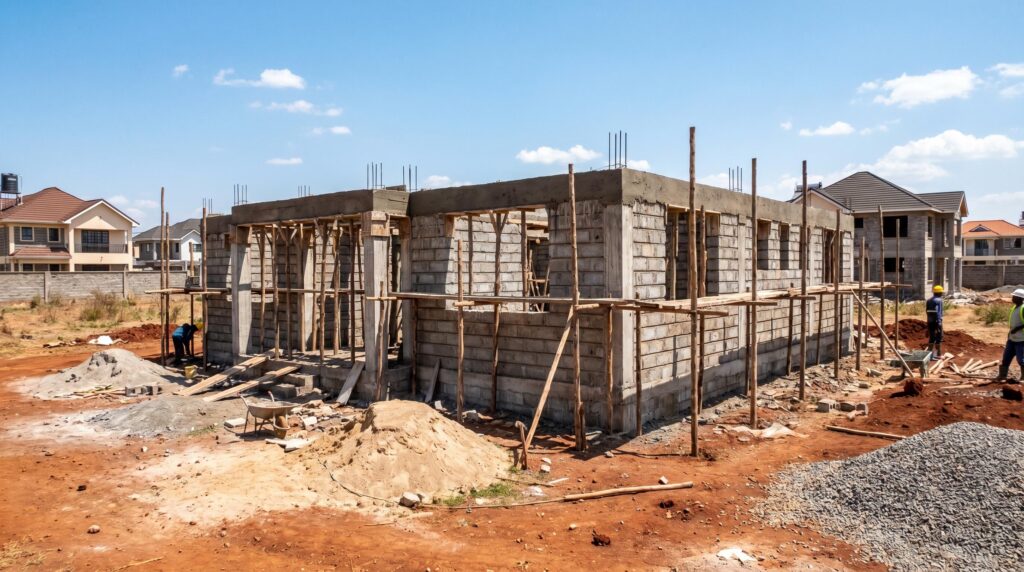
Common mistakes during the basic steps of building and construction in Kenya
When one follows these basic steps of building and construction in Kenya, they are assured of a smooth project and a successful product at the end. Many projects, though, run into issues along the way. These are some of the most common mistakes to avoid.
1 Hiring unqualified professionals in the various stages
At the early stage of construction, it is necessary to have qualified professionals to do the work. Many project owners choose affordable options, not considering the final output they desire. Timely Architecture and Engineering Survey is a company that offers a comprehensive collection of building and construction services, starting from architectural designs, quantity survey, engineering services and building and construction management and supervision. As a company that has experience in the field of building and construction in Kenya, they can help seek out complementary service providers for metal fabrication and welding, plumbing, electrical fixtures, among other complementary services needed during the whole construction process.
2 Poor budgeting
Whether you are building a residential home or a commercial building, building and construction are expensive. It is necessary to get a quality and accurate bill of quantity from qualified quantity surveyors like the Timely Architecture and Engineering Survey. They will ensure effective planning of different stages of construction.
3 No site supervision
Site supervision is always also a necessary cost. It will ensure that there are no mistakes from the foundation to the roofing stage, which would otherwise be costly to repair in the future. On-site supervision also allows for minor modifications to the project design to increase efficiency and manage costs.
Companies like Timely Architecture and Engineering Survey have, over the years, cultivated their experience and professionalism to ensure that their clients get the best service. The company has a collection of professionals from different building and construction sectors, including architects, engineers, contractors, quantity surveyors, supervisors and quality assurance personnel, which helps ensure complete management of projects from start to end. Further, they have built networks with complementary companies like metal fabricators and welders, electricians, plumbers, interior designers, and land surveyors. This gives them a hedge in the industry as they can link a client to the best possible service provider at the moment.
It doesn’t matter if you are planning to build your first home, a commercial property, or a large-scale infrastructure project; you need a trusted guide. Timely Architecture and Engineering Survey offers complete building and construction services – from design, approvals, engineering and construction supervision. We help you turn your dream into a reality.
Get in touch with us today to become a partner.
Contact Us Today